
Key Takeaways
Hyper-local SEO dominates
78% of consumers search "near me" before making a purchase.
Compliance-first approach
Regulatory violations can cost between $10,000 and $50,000 in fines.
Data-driven personalization
Segmented campaigns result in 3x higher conversion rates.
Education builds trust
67% of customers want to be educated before they buy.
Multi-channel integration
Top-performing brands utilize 5+ marketing channels simultaneously.
The cannabis landscape in 2026 is a far cry from the “Wild West” days of a decade ago. As the industry matures into a $53.5 billion market, the stakes for dispensaries and brands have never been higher. With 67% of Americans now enjoying legal access to cannabis, the competition is no longer just about who has the best flower, it’s about who has the smartest cannabis marketing strategies.
Despite this growth, the “Green Wall” remains. You still can’t jump onto Google Ads with ease, Meta still shadowbans accounts for showing a leaf, and Instagram’s algorithm remains notoriously fickle. At Spokes Digital, we’ve spent 10 years navigating these regulatory minefields. We know that success in 2026 doesn’t come from trying to “hack” the system, but from building a resilient, multi-channel marketing engine that turns local browsers into lifelong advocates.
In this guide, we’re sharing 15+ battle-tested tactics designed to help you dominate your local market while staying 100% compliant.
2026 Industry Statistics at a Glance
Metric | Statistic |
U.S. Market Size | $53.5B |
Legal Access | 67% of Americans |
Search Growth | 412% in Cannabis Queries (5yr) |
Online Presence | 82% Prefer Dispensaries with a Site |
1. Build Deep Audience Intelligence
In 2026, treating all “stoners” as a monolith is a recipe for wasted ad spend. To drive real ROI, you must segment your audience based on their specific needs and lifestyles.
The Five Core Cannabis Consumer Segments
- Medical Patients (25-30%): These users prioritize consistency and lab results. Your marketing should focus on terpene profiles and specific medical benefits.
- Wellness Seekers (20-25%): They look for CBD, low-dose THC, and organic options. Focus on self-care and lifestyle integration.
- Social Consumers (30-35%): Price-conscious and brand-aware, they want variety for social settings. Highlight promotions and social proof.
- Cannabis Enthusiasts (15-20%): These are your “connoisseurs” hunting for rare genetics and craft quality. Focus on strain lineage and exclusivity.
- Curious First-Timers (5-10%): They need reassurance. Use beginner guides and safety-focused content to lower the barrier to entry.
Pro Tip: Use your Point of Sale (POS) data to segment customers by purchase frequency and transaction value. Personalized emails for these segments outperform generic blasts every time.
2. Dominate Hyper-Local SEO
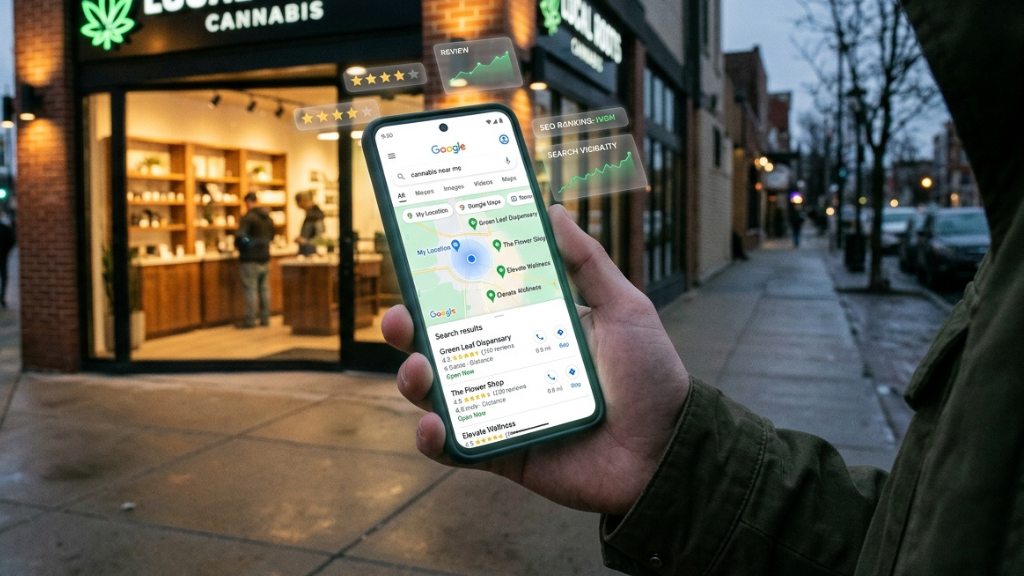
With 78% of consumers searching for “cannabis near me,” local SEO is no longer optional, it is your most valuable survival tool.
The Local SEO Framework
- Google Business Profile (GBP) Optimization: Don’t just set it and forget it. Post 2-3 times per week about new strains or events, and ensure you have at least 20+ high-quality photos.
- Location-Specific Content: Create landing pages like “Cannabis Delivery in [Neighborhood Name]” or guides titled “Best Dispensary for Medical Patients in [City]”.
- NAP Consistency: Ensure your Name, Address, and Phone number are identical across Weedmaps, Leafly, Yelp, and your local Chamber of Commerce.
- Local Backlinks: Partner with nearby non-cannabis businesses for cross-promotion or sponsor a local community event to earn high-authority local links.
3. Technical SEO Excellence
Most cannabis websites are slow, clunky, and poorly structured. In 2026, technical SEO for cannabis is your competitive advantage.
- Site Speed: If your site takes longer than 3 seconds to load, 90% of users will leave. Aim for a Largest Contentful Paint (LCP) under 2.5s.
- Mobile-First Design: Since 73% of cannabis searches happen on mobile, your checkout process must be “thumb-friendly”.
- Site Architecture: Follow a flat structure where any page is accessible within 3 clicks.
- Compliance Warning: Ensure your age-gate is robust and that your site doesn’t accidentally allow shipping to prohibited jurisdictions.
4. Strategic Content Marketing
Content is the bridge between a search query and a loyal customer. In the cannabis industry marketing, you must educate to dominate.
High-Performance Content Types
- Pillar Guides: Create a “Complete Guide to Cannabis for Sleep” to rank for long-tail keywords.
- Product Education: Write detailed strain reviews that go beyond “indica vs. sativa” and dive into terpene profiles.
- Interactive Tools: Implement dosage calculators or “strain finders” to keep users on your site longer.
- Video Content: Use staff interviews or facility tours to humanize the brand and show transparency.
5. Systematic Review Management
Reviews influence your local rankings and are the ultimate form of social proof.
- Automate Requests: Send an SMS or email 2-3 hours after a purchase while the experience is fresh.
- The Response Protocol: Respond to every review within 24 hours. If it’s negative, apologize and offer an offline resolution; if it’s positive, thank them specifically for the product they mentioned.
- Stay Compliant: Never offer direct discounts for a review, as this violates most platform Terms of Service. Instead, offer loyalty points for general “feedback”.
6. Advanced Email Marketing & Segmentation
In the restrictive landscape of 2026, email marketing for cannabis remains your most powerful “owned” channel, meaning no algorithm or sudden policy shift can take your audience away from you. While social platforms are rented land, your email list is your digital headquarters.
- Lifecycle Campaigns: Build a welcome series (5-7 emails) that introduces your brand values and provides educational value before asking for a sale.
- Product-Based Triggers: Set up automated emails for cart abandonment or “back-in-stock” alerts for popular strains.
- Win-Back Sequences: Target customers who haven’t visited in 30, 60, or 90 days with a “We Miss You” incentive.

7. Navigating Social Media’s Minefield
Social media in 2026 is like playing chess blindfolded, the rules change constantly.
- Instagram: Stick to lifestyle and education. Avoid showing price tags or linking directly to sales pages to prevent account bans.
- TikTok: Currently, the most cannabis-friendly space for behind-the-scenes content and staff spotlights.
- LinkedIn: An underutilized goldmine for B2B networking and established brand authority.
- Twitter (X): Excellent for real-time news updates and customer service.
8. Strategic Influencer Partnerships
The influencer space has matured. It’s no longer about who has the most followers, but who has the most trust.
- Micro-Influencers: Those with 5K-50K followers often have higher engagement and are better for local market penetration.
- Industry Experts: Budtenders and medical professionals provide more credibility than a standard lifestyle model.
- Action Plan: Review past brand partnerships of potential influencers to ensure they align with your brand’s compliance standards.
9. Build Real Community
Strong brands are built on genuine human connections, not just digital followers.
- Educational Events: Host monthly “cooking with cannabis” classes or terpene education seminars.
- Loyalty Beyond Points: Create exclusive tiers that offer early access to new drops or limited-edition merchandise.
- User-Generated Content (UGC): Encourage your community to share their experiences and feature them on your official channels.
10. Compliance-First Marketing (The Shield for Your ROI)
In 2026, the cost of a single marketing oversight isn’t just a “slap on the wrist.” Regulatory bodies have ramped up enforcement, with fines now ranging from $10,000 to over $50,000 per violation. High-growth dispensaries recognize that compliance isn’t a hurdle; it’s a competitive advantage that keeps the doors open while others face suspension.
The Non-Negotiable Compliance Pillars
- Advanced Age Gating: Move beyond the simple “Click Yes” pop-ups. Implement robust third-party verification solutions on your website and social links to prevent minors from accidentally accessing restricted content.
- The “Claims” Red Zone: Never make direct or implied medical claims unless you are a licensed medical provider. Avoid health benefit statements; instead, focus on the experience and education behind the product.
- Geographic Integrity: If you offer delivery, your digital ads must be geo-fenced. Use verification software to block orders or marketing views from prohibited areas to avoid cross-jurisdictional legal battles.
- Packaging Imagery: Ensure that any product photography used in your marketing mirrors current, compliant packaging and includes all state-mandated warning statements.
11. Data-Driven Decision Making
Gone are the days of “spray and pray” advertising. The most profitable cannabis brands in 2026 obsess over four specific data categories to ensure every marketing dollar generates a return.
Metrics That Actually Move the Needle
- Acquisition Metrics: Track your Customer Acquisition Cost (CAC) by channel. If an influencer is driving traffic but your organic SEO is driving 5x the conversions, your data will tell you where to shift your budget.
- Engagement Metrics: Look beyond “likes”. Measure content time-on-page and email click rates by segment to see which educational topics are actually resonating with your audience.
- Conversion Metrics: Monitor your Average Order Value (AOV) and cart abandonment rates. High abandonment often points to a friction point in your technical SEO or checkout flow.
- Retention Metrics: This is the secret to high ROI. Calculate Customer Lifetime Value (LTV) and repeat purchase rates. It is significantly cheaper to retain a current customer than to acquire a new one.
12. Experiential Marketing & Community Events
Since traditional advertising remains heavily restricted on platforms like Google and Meta, physical experiences have become the primary way to build brand equity in 2026.
Creating “Shareable” Moments
- Educational Workshops: Host in-store sessions such as “Cooking with Cannabis” or “Terpene Education Seminars”. Charging a nominal fee or making these exclusive to loyalty members adds a layer of prestige.
- Product Launch Events: Generate buzz for new strains or exclusive drops by inviting influencers and top-tier loyalty members to “first-look” events.
- Pop-Up Experiences: Utilize temporary retail spaces or mobile education units to reach new markets or participate in local festivals where permitted.
- Advocacy & Charity: Sponsor local neighborhood events or host charity drives. This humanizes the brand and integrates the dispensary into the local community fabric.
13. Competitive Intelligence & Market Positioning
Success in a crowded market requires finding the “white space” that your competitors are ignoring. You can’t differentiate if you don’t know what else is on the shelf.
The Competitive Analysis Framework
- The Mystery Shop: Regularly evaluate your competitors’ in-store and online ordering experiences. Is their staff more knowledgeable? Is their delivery faster?
- Digital Footprint Analysis: Use tools to analyze competitor SEO rankings and review sentiment. If customers are complaining about a competitor’s wait times, emphasize your “express pickup” in your own marketing.
- Promotional Monitoring: Subscribe to competitor email lists and monitor their social media to stay ahead of pricing trends and seasonal promotions.
14. Omnichannel Integration
In 2026, the customer journey is rarely linear. A consumer might see a TikTok, receive an email, and then visit your store to buy. Omnichannel integration ensures that the brand experience is seamless across all these touchpoints.
Connecting the Dots
- Web to In-Store: Ensure your online menu is perfectly synced with your physical inventory. Nothing kills ROI faster than a customer arriving for a “pickup” only to find the item is out of stock.
- Cross-Channel Recovery: If a customer abandons a cart on your website, trigger a personalized SMS or email reminder to bring them back.
- Social to Email: Use social media contests to drive email sign-ups, effectively moving “borrowed” audiences into your “owned” channels.
15. Authentic Brand Storytelling
With so many dispensaries offering similar products, your story is your strongest differentiator. Consumers in 2026 align with brands that reflect their own values.
Elements of a Connection-Driven Story
- Origin & Mission: Share the “Why” behind your brand. Whether it’s a commitment to sustainability, social justice, or medical access, lead with your values.
- Humanize the Team: Feature your budtenders and growers. Showing the passion and expertise of your staff builds trust that a logo cannot achieve on its own.
Community Impact: Highlight the tangible ways you are helping the local economy or supporting advocacy groups. This transforms your dispensary from a “store” into a “community partner.”
Your 2026 Cannabis Marketing Roadmap
Success in 2026 comes from an integrated system, not individual tactics. Start with the fundamentals: audience intelligence, local SEO, and a technical website foundation. Layer on content marketing and email segmentation, then expand into social community building.
Success in this industry doesn’t come from a single “silver bullet” tactic. It comes from an integrated system:
- Start with the Fundamentals: Master your audience intelligence and local SEO.
- Layer on Content: Use education to build authority and trust.
- Expand into Automation: Use email and SMS to drive repeat purchases.
- Stay Compliant: Never stop auditing your processes.
Cannabis marketing requires creativity, persistence, and agility. While the regulations will continue to shift, the principles of building genuine value and authentic relationships remain constant.